
The Salesian presence in the historic Roman district of Testaccio dates back to the beginning of the twentieth century. The origin of the Opera Salesiana Testaccio can be traced to the year 1900, when the primary apostolate entrusted to the Salesians was the care of the primary schools affiliated with the Holy See.
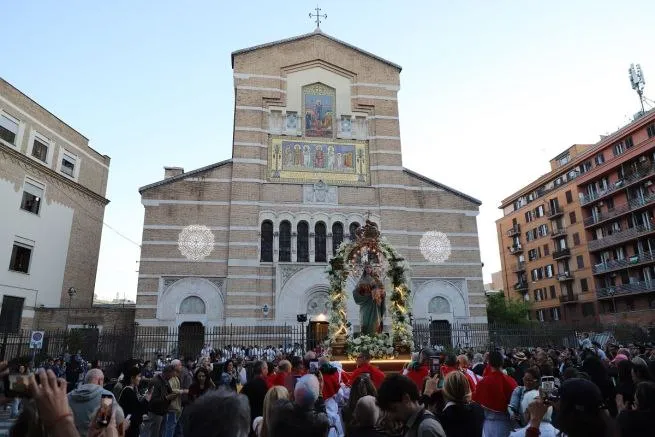
Initially, the mission had been proposed to the Benedictines of St. Anselm. However, Pope St. Pius X personally encouraged Don Michele Rua, the first successor of St. John Bosco, to entrust the work to the Salesians. Accepting the Pope’s invitation, Don Rua sent confreres who travelled daily from the Salesian community of the Sacro Cuore (Sacred Heart) in central Rome to carry out the mission in Testaccio. What began as a modest educational initiative gradually grew into a vibrant centre of Salesian pastoral activity.
The Parish Apostolate
As the Salesian presence took root in the neighbourhood, the pastoral needs of the local population also became part of the mission. This development led to the establishment of the parish Santa Maria Liberatrice (St. Mary the Liberator), which was officially consecrated on 29 November 1908.
With the parish came a new and dynamic dimension of Salesian life: the oratory. Faithful to the spirit of Don Bosco, the oratory quickly became a gathering place for large numbers of young people who came daily for prayer, formation, recreation, and companionship. The mission in Testaccio thus expanded beyond the classroom to embrace parish ministry, youth pastoral work, and educational formation.
Over time, the Salesian work in the area developed its distinctive character. Parish activities flourished, youth groups and pious associations were formed, and the oratory became a lively centre of Christian and social life for the young people of the district.
The Birth of the Salesian Community
For many years, the Salesians serving in Testaccio still officially belonged to the community of Sacro Cuore in Rome. This situation continued until 1921, when the Salesian community of Testaccio was formally established under the patronage of St. Joseph Cafasso, the spiritual guide of Don Bosco.
As the decades passed, the educational apostolate that had marked the beginning of the mission gradually changed. The school, once the primary focus of the work, was progressively reduced until 1980, when it remained only with primary classes. The unused classrooms were then adapted to serve another important Salesian need: housing for Salesian seminarians and students pursuing studies in philosophy and theology in Rome.
An International Salesian Community
Today, the Salesian community of Testaccio reflects the international character of the Congregation. Over the years, the seminarians who once lived here have been replaced by Salesians from different parts of the world who come to Rome for specialization and studies at the Pontifical Universities.
At present, the community is home to 38 confreres representing countries such as Brazil, Argentina, Italy, Nigeria, Congo, Tanzania, Kenya, and India, among others. The community is led by Fr. Orestes Carlinhos Fistarol, who serves as Rector.
Life in Testaccio therefore, continues the rich Salesian tradition of study, fraternity, and pastoral commitment. The community not only serves the local parish and youth but also forms part of the wider mission of the Congregation by supporting the academic and spiritual formation of Salesians from across the globe.
A Visit from the Province
Recently, the community had the joy of welcoming the Provincial and the Provincial Economer, who are currently visiting confreres studying or working in Europe. Their visit was a moment of fraternal encounter, encouragement, and renewed connection with the Province.
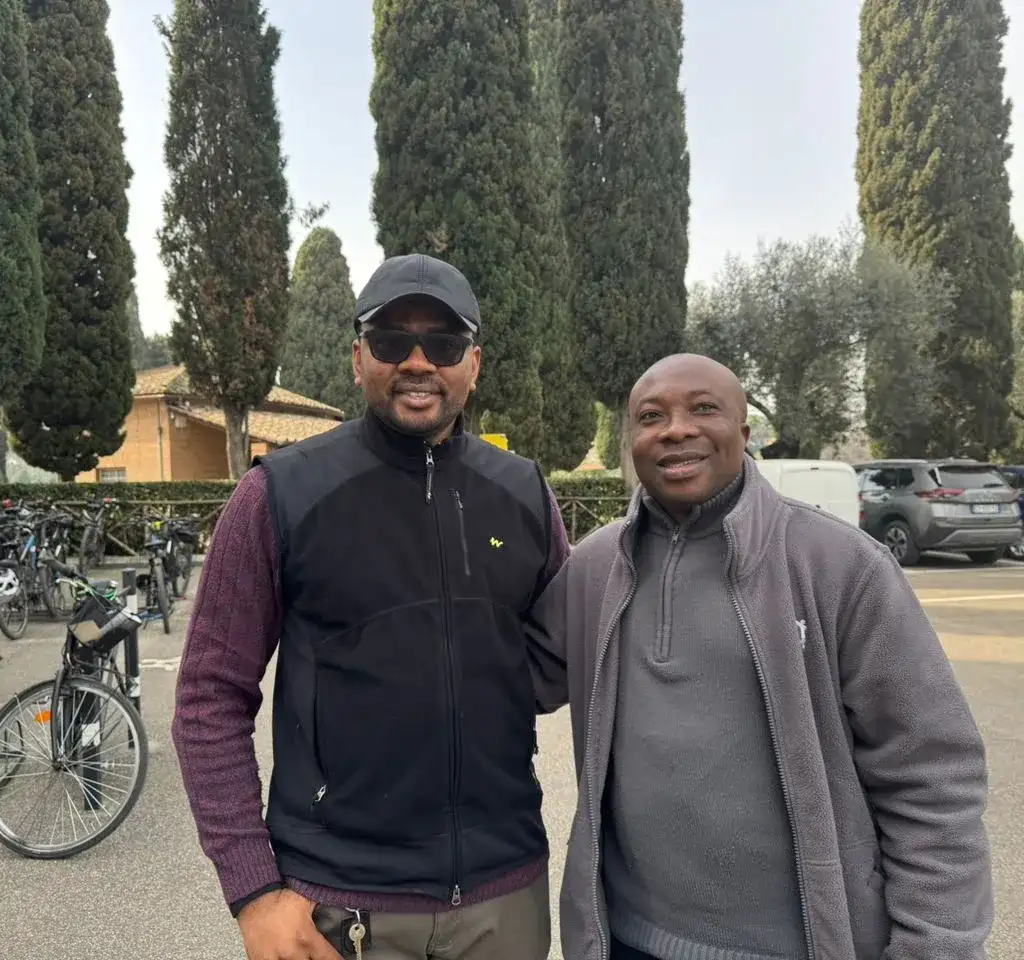
For those of us living and studying far from home, such visits are a reminder that we remain deeply united with our confreres and our mission back in the Province. It was a moment of shared conversation, prayer, and reflection on the ongoing mission of Don Bosco in different parts of the world.
Even here in the heart of Rome, the spirit of Don Bosco continues to live on — in community life, in pastoral service, and in the commitment to form ourselves more deeply for the service of the young.
- Deacon Ekene-Maria Adizue, SDB